

Inside Air Drake: The Ultimate Sky Mansion
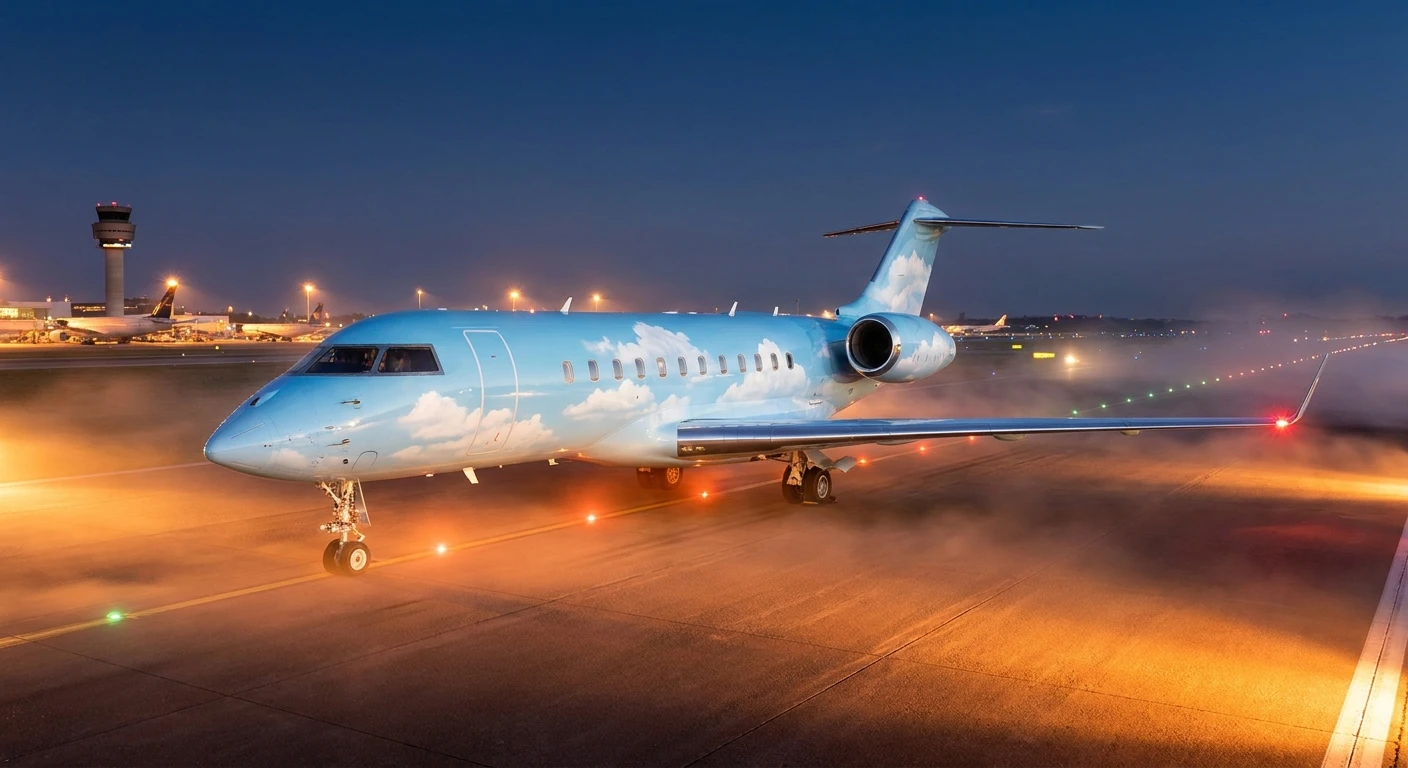
If you have ever tracked celebrity flights or scrolled through high-end aviation feeds, you already know that Air Drake is not just a plane; it is an absolute flying palace. When it comes to luxury travel, owning a private jet is the ultimate status symbol, but securing an entire wide-body Boeing 767 takes things to a completely different stratosphere. The scale, the design, and the sheer audacity of this aircraft have made it one of the most famous private planes on the planet. Forget the standard cramped cabins of typical business jets. We are talking about a massive commercial airliner completely gutted and retrofitted to serve as a high-altitude luxury mansion. You have probably seen the jaw-dropping exterior photos featuring that iconic light blue cloud design, but what exactly goes into operating, maintaining, and flying an aircraft of this magnitude? In this complete guide, we are breaking down everything you need to know about the engineering, the aesthetics, and the incredible story behind this legendary aircraft. Sit tight, because the reality of this aviation marvel is even wilder than the rumors.
The Unmatched Value and Amenities of a Wide-Body Private Jet
Let me tell you right now, flying on a standard private jet is amazing, but flying on a converted commercial airliner is an entirely different sport. The primary benefit of a massive airframe is uncompromised space. Most business jets require passengers to duck their heads or navigate narrow aisles. A Boeing 767 offers incredible cabin height and width, allowing for full-sized furniture, multiple distinct living zones, and a capacity that lets entire teams, crews, and entourages travel together without feeling squeezed. The sheer payload capacity means you never have to choose between carrying heavy equipment, luxury amenities, or additional fuel. It is an airborne hotel. Look at how this behemoth stacks up against the alternatives.
Read also: The Truth About Kanye West Teeth: Full Timeline; Archie and Lilibet Now: California Royal Updates.
| Feature | The Celebrity 767 | Standard VIP Jet (e.g., G650) | Commercial First Class |
|---|---|---|---|
| Cabin Width | 15 feet, 6 inches | 8 feet, 6 inches | Shared wide-body cabin |
| Passenger Capacity | Customized for ~30 VIPs | Up to 19 passengers | 10-14 in First Class cabin |
| Living Zones | Bedrooms, theater, lounge | Small divan, mostly seats | Just a single lie-flat seat |
To truly understand the value proposition of a jet of this caliber, you have to look at the custom interior elements that make it special. It is not just about having seats; it is about having architecture in the sky.
- The Primary Suite: Instead of a fold-out couch, this aircraft features a dedicated private bedroom with a king-sized bed, premium linens, and a fully enclosed private lavatory, ensuring complete rest on long-haul transoceanic flights.
- The Entertainment Lounge: The central fuselage acts as a massive media room. We are talking about large-screen televisions, theater-quality surround sound, and massive custom leather recliners that rival high-end cinema seating.
- The Gold-Plated Aesthetics: The interior surfaces are heavily accented with bespoke gold and wood finishings. Even the seatbelt buckles and interior fixtures feature custom metallic branding, elevating the tactile experience of the cabin.
Origins and Evolution of a Cultural Icon
Origins of the Cargojet Partnership
The story of this massive aircraft starts with a brilliant business maneuver rather than a simple purchase. Back in 2019, it was revealed that the plane was actually part of a massive promotional partnership with the Canadian freight airline Cargojet. Ajay Virmani, the CEO of Cargojet, saw an opportunity for unprecedented global brand exposure. Instead of the celebrity dropping upwards of $200 million to buy and completely outfit a brand new wide-body plane, Cargojet provided the heavily customized Boeing 767-200. In exchange, the aircraft acts as a flying billboard, generating millions of dollars in organic public relations every time it lands at a major international airport. It was a win-win situation that revolutionized how high-profile transportation deals could be structured.
Evolution of the Exterior Design
When the jet first made its debut in 2019, it sported a relatively straightforward, albeit massive, custom paint job. The original livery featured a light blue base with a giant owl logo on the fuselage and “Cargojet” prominently displayed to honor the partnership. It was striking, but it was just the beginning. In 2020, the aesthetic took a massive leap forward. The late, visionary designer Virgil Abloh was brought in to completely reimagine the exterior. Moving away from standard corporate designs, Abloh conceptualized a design inspired by the cover art of the album Nothing Was The Same. The aircraft was repainted to look like a vibrant blue sky dotted with fluffy white clouds, transforming the 767 from a luxury vehicle into a massive piece of flying contemporary art.
Modern State of Celebrity Aviation
Today, this aircraft stands as the absolute benchmark for celebrity aviation. While other A-listers continue to buy smaller, traditional Gulfstreams or Bombardiers, the cloud-covered 767 remains an unmatched flex of scale and style. It is heavily utilized for international tours, luxury vacations, and high-profile appearances. Because it is a commercial-grade airframe, it is maintained to the highest, most rigorous commercial aviation standards, blending the opulence of a private yacht with the safety and reliability of a major airline freighter.
Technical Deep Dive: Engineering a Flying Palace
The Boeing 767-200ER Airframe
Underneath the custom paint and plush carpets, this is a serious piece of heavy machinery. The Boeing 767-200ER (Extended Range) is a twin-engine wide-body airliner originally designed to carry over 200 passengers across oceans. When you convert an aircraft of this size for VIP use, the engineering parameters change drastically. By removing hundreds of heavy commercial seats and replacing them with a lighter, albeit more luxurious, custom interior, the aircraft’s weight distribution and overall performance shift. The reduction in total passenger weight allows the plane to carry more fuel and achieve incredible range, making non-stop flights from North America to Europe or Asia easily manageable. The airframe’s robust design means it can handle turbulent conditions far better than lighter, smaller private jets.
Custom Avionics and VIP Pressurization
Flying in a wide-body jet offers significant physiological benefits thanks to advanced pressurization and climate control systems. Standard commercial flights can leave you feeling dehydrated and fatigued because the cabin is pressurized to a higher altitude and the air is extremely dry. In a customized VIP wide-body, environmental control systems are often upgraded. The avionics suite in the cockpit is retrofitted with the latest digital glass-cockpit technology, modern weather radar, and satellite communication systems ensuring the pilots have state-of-the-art navigational tools, even if the airframe itself is a legacy model. Let us look at some of the hard scientific facts regarding this class of aircraft.
- Powerplants: Powered by two massive high-bypass turbofan engines, typically General Electric CF6 or Pratt & Whitney PW4000 series, providing upwards of 50,000 pounds of thrust each.
- Cruising Speed: Operates efficiently at a cruising speed of roughly Mach 0.80 (about 530 mph or 850 km/h) at altitudes up to 41,000 feet.
- Wingspan and Length: Features a massive wingspan of 156 feet (47.5 meters) and a total length of 159 feet (48.5 meters), requiring large, specialized hangars and heavy-rated runways for operation.
- Fuel Capacity: Can hold over 24,000 gallons of jet fuel, burning roughly 1,500 to 1,700 gallons per hour depending on weight and cruising altitude.
7 Stages of Converting a Commercial Airliner into a VIP Jet
If you have ever wondered how a standard passenger plane becomes a customized luxury mansion, it is an incredibly complex engineering feat. Here is the step-by-step process of how a wide-body aircraft undergoes this massive metamorphosis.
Stage 1: Structural Assessment and Airframe Testing
Before a single luxury seat is installed, the legacy commercial aircraft undergoes a grueling inspection. Engineers use non-destructive testing, like ultrasonic and x-ray scans, to check the airframe for microscopic metal fatigue, corrosion, or stress fractures. Every inch of the aluminum skin must be certified safe for another decade of high-altitude flight.
Stage 2: Stripping the Commercial Interior
The interior is completely gutted. Crews remove all 200+ passenger seats, the overhead luggage bins, the commercial galleys, and the standard lavatories. They strip the cabin all the way down to the bare green primer and exposed insulation. This creates a massive empty metallic tube that serves as the blank canvas for the VIP designers.
Stage 3: Advanced Acoustic Insulation
Commercial planes are loud. To achieve the whisper-quiet environment expected in a luxury mansion, teams line the inner fuselage with heavy-duty acoustic blankets, specialized sound-dampening foam, and vibration isolators. This dramatically reduces engine drone and wind noise.
Stage 4: Custom Wiring and Sub-Systems Installation
Miles of new wiring are laid down. A VIP jet requires immense electrical power to run custom theater systems, high-speed satellite internet, advanced ambient lighting, and high-end galley appliances. The environmental control systems are also modified to provide superior air filtration and humidity control.
Stage 5: Installing VIP Modules and Bulkheads
Rather than building furniture piece-by-piece inside the plane, modular rooms (like the bedroom and private bathrooms) are often built outside the aircraft. These modules are carefully maneuvered through the cargo doors and secured to the aircraft’s internal floor tracks. Heavy structural bulkheads are installed to divide the massive cabin into distinct private zones.
Stage 6: Exterior Paint and Custom Livery
The aircraft is towed into a massive climate-controlled paint hangar. The old commercial paint is chemically stripped. Applying a design like Virgil Abloh’s clouds requires dozens of layers of primer, base coats, hand-painted details, and clear coats, adding several hundred pounds of weight to the exterior.
Stage 7: Final FAA Certification and Flight Testing
Before the celebrity owner can step aboard, the aircraft must be rigorously tested. Pilots perform high-stress flight maneuvers to ensure the new heavy interior modules do not shift. The FAA (or equivalent aviation authority) meticulously reviews the weight and balance calculations before issuing the final airworthiness certificate.
Myths & Reality: Separating Fact from Fiction
Because of the massive media attention surrounding this plane, rumors run wild. Let’s clear up some of the biggest misconceptions.
Myth: The owner paid $200 million in cash for the plane.
Reality: The aircraft was heavily subsidized and provided as part of a massive promotional partnership with Cargojet. The celebrity did not pay retail price; the PR value offsets the cost.
Myth: The aircraft is a brand-new model off the assembly line.
Reality: The airframe is a legacy Boeing 767-200. It previously served as a standard commercial passenger plane for decades before being retired, purchased, and entirely retrofitted.
Myth: The cloud design is just a giant vinyl wrap.
Reality: The Virgil Abloh cloud exterior is an intricate, hand-sprayed custom paint job. Wrapping an aircraft of this size is impractical due to extreme temperature fluctuations and high-altitude winds.
Myth: It flies purely on sustainable energy.
Reality: While aviation tech is advancing, a classic wide-body 767 burns thousands of gallons of traditional Jet-A fuel per flight. It is undeniably a heavy polluter.
Frequently Asked Questions
Who actually owns the aircraft?
While branded heavily for the celebrity, the aircraft is closely tied to Cargojet, which handles the complex logistics, maintenance, and operational licensing required for a Boeing 767.
How large is the cabin?
The cabin is exceptionally massive, measuring roughly 15 feet wide and over 100 feet long, providing more square footage than many urban luxury apartments.
Who designed the cloud exterior?
The iconic blue sky and white cloud livery was masterminded by the late, legendary fashion designer Virgil Abloh in 2020.
What is the maximum flight range?
With its VIP configuration and auxiliary tanks, the aircraft can fly continuously for roughly 10 to 12 hours, easily connecting North America to deep Europe or the Middle East without refueling.
Does the plane have a real bedroom?
Yes, it features a completely private primary suite with a full king-sized bed, vastly outperforming the small convertible divans found in standard private jets.
How much does it cost to operate per hour?
Operating a Boeing 767 costs roughly $15,000 to $20,000 per flight hour when factoring in jet fuel, pilot salaries, heavy maintenance reserves, and airport landing fees.
Is the plane available for public charter?
No. Unlike some celebrity jets that are leased out to offset costs, this heavily branded wide-body aircraft is reserved strictly for the artist’s personal and professional use.
What kind of engines does it use?
It is powered by two massive turbofan engines, standard for commercial wide-body airliners, built for incredible durability and long-haul reliability over oceans.
How many passengers can it comfortably hold?
While a commercial 767 holds over 200 people, this custom VIP layout is designed to comfortably fly around 30 of the owner’s closest friends, family, and crew in total luxury.
What happened to the original paint job?
The original minimalist blue design featuring the OVO owl and Cargojet text was entirely painted over during the 2020 Virgil Abloh redesign.
To wrap things up, Air Drake is not just an airplane; it is a masterclass in branding, luxury, and aviation engineering. From its origins as a working-class commercial airliner to its current state as a flying contemporary art piece, it has completely redefined what it means to travel in style. If you found this deep dive into the world’s most famous Boeing 767 fascinating, be sure to share this guide with your fellow aviation enthusiasts and drop a comment with your favorite feature of this incredible sky mansion!

Leave a Reply