

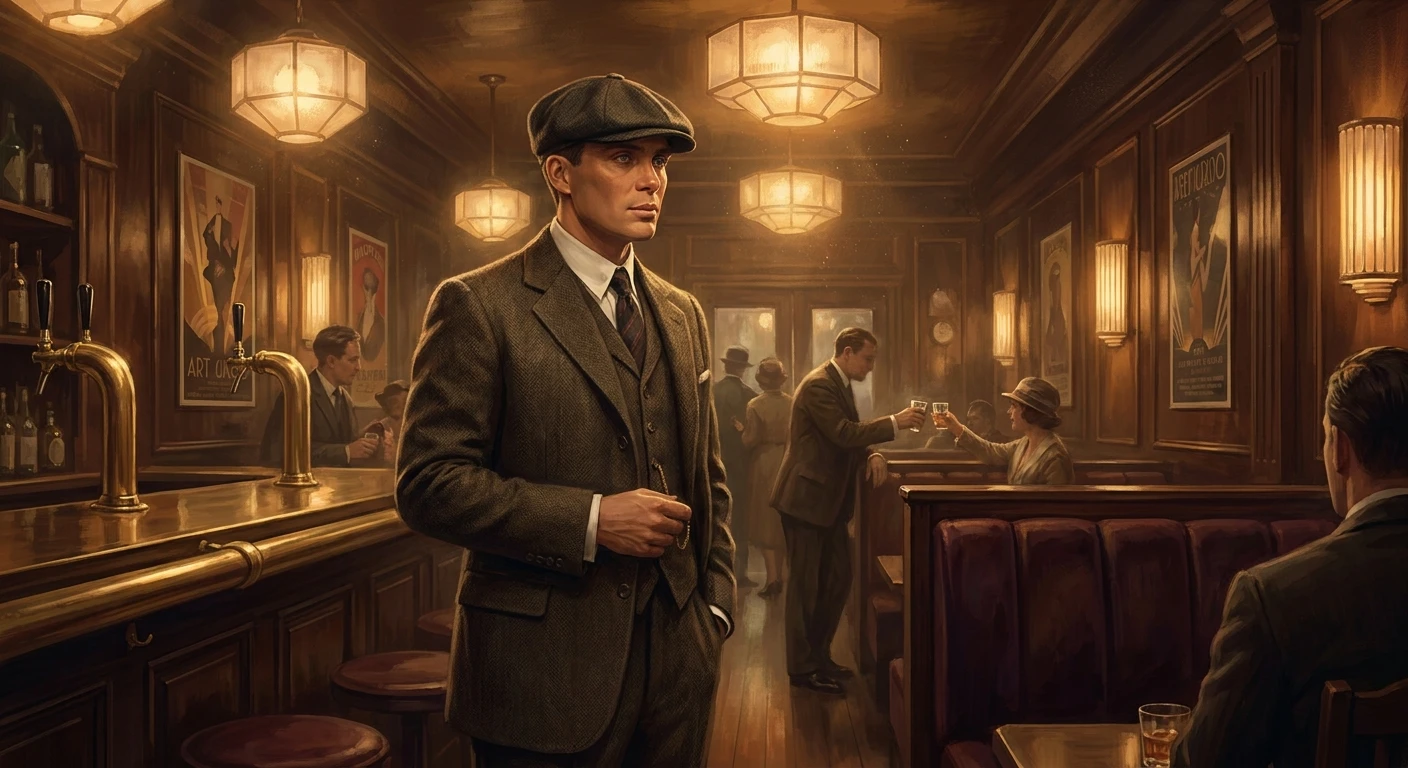
George Moran: The Architect of Chicago’s North Side Gang
You know the name Al Capone, but the history of Chicago’s underworld remains completely unbalanced without discussing his absolute worst nightmare. When you study the life of George Moran, you are looking at the ruthless architect of the North Side Gang, a man who built a massive illicit empire during the height of the Roaring Twenties. The Prohibition era created a unique vacuum where organized crime figures operated like corporate executives, managing supply chains, payrolls, and public relations. George Moran, widely known as ‘Bugs’, stepped into this chaotic environment with a level of aggression and strategic cunning that terrified his rivals and captivated the press. His relentless war for control of the city’s illegal liquor trade reshaped American law enforcement and left a permanent mark on historical criminology. Understanding his reign requires looking past the sensational newspaper headlines of the 1920s and examining the actual mechanics of how his organization functioned. His tactics, alliances, and eventual downfall offer a masterclass in the dangerous economics of bootlegging. From his early days running petty theft operations to becoming a national target, his story is one of rapid ascent and dramatic collapse.
The Core of a Prohibition Empire
Operating a massive criminal syndicate in the 1920s required more than just brute force; it demanded intricate logistical planning and a keen understanding of supply and demand. The value of studying these historical syndicates lies in comprehending early 20th-century black market economics. By examining how they operated, we gain insight into rapid organizational scaling. For example, managing cross-border logistics from Canada required coordinating fleets of boats, trucks, and bribed border officials. Another clear example is the creation of decentralized distribution hubs; rather than storing all illicit goods in one warehouse, operations were scattered across dozens of residential garages to minimize losses from police raids. George Moran mastered these systems, ensuring the North Side Gang remained immensely profitable despite constant territorial wars.
Read also: Answered: How Old Is Mason Disick Right Now?; Cristina Invernizzi: The Woman Behind the Wolf.
| Mob Leader | Territory | Primary Operations |
|---|---|---|
| George Moran | North Side Chicago | Bootlegging, Dog Racing, Union Racketeering |
| Al Capone | South Side Chicago | Speakeasies, Gambling, Prostitution |
| Dean O’Banion | Early North Side | Flower Shops (Fronts), Hijacking, Smuggling |
To secure his position at the top of the Chicago underworld, he executed a series of highly calculated maneuvers that stabilized his control over the city’s northern territories.
- Consolidating the Leadership: After the assassination of his predecessors, he quickly unified the fractured gang members under a single, aggressively expansionist vision.
- Hijacking Rival Shipments: Instead of merely importing his own liquor, he actively intercepted and stole incoming shipments meant for the South Side, effectively doubling his profit margins while simultaneously weakening his enemies.
- Establishing Political Cover: He aggressively funded local political campaigns and bribed law enforcement officials to ensure his primary distribution hubs were protected from random police raids.
History and Origins of a Street Boss
Origins of the Underworld Boss
Born Adelard Cunin in 1893 to immigrant parents, his early life was far removed from the glamorous speakeasies he would later control. Growing up in Minnesota, he quickly found himself entangled in juvenile delinquency. Seeking larger opportunities, he migrated to Chicago, a city expanding so rapidly that law enforcement completely failed to keep pace with the booming population. It was here he adopted the name George Moran, distancing himself from his past and embedding himself in the brutal street corners of the North Side. His imposing physical presence and complete disregard for authority quickly caught the attention of established local figures, paving his way into organized syndicates.
The Evolution of the North Side Gang
The transition from a minor street enforcer to a supreme organizational boss did not happen overnight. The North Side Gang was initially built by Dean O’Banion, a charismatic leader who used a floral shop as a front for massive bootlegging operations. When O’Banion was gunned down, leadership passed to Hymie Weiss, and then to Vincent Drucci. Each leader fell to rival violence, effectively forcing George Moran into the top position by 1927. Under his command, the gang evolved from a localized smuggling crew into a highly militarized outfit. He escalated the ongoing feud with the South Side, ordering drive-by shootings and targeted assassinations that turned the streets of Chicago into a literal war zone.
The Modern State of His Legacy
Decades after his death, the historical footprint he left behind continues to fascinate historians and criminologists alike. Today, his legacy is primarily tethered to the infamous events of 1929, serving as a cautionary tale of hubris and the inevitable collapse of criminal monopolies. Pop culture routinely references his era in films, literature, and television, often romanticizing the sharp suits and jazz-filled clubs while glossing over the brutal realities of his reign. Historic tours in Chicago still map out the locations of his former strongholds, ensuring his name remains a prominent fixture in the city’s turbulent history.
The Economics and Mechanics of Bootlegging
Logistical Framework of 1920s Smuggling
To comprehend the scale of his success, one must understand the sheer logistical complexity of ‘rum-running’. This was the process of illegally transporting liquor over international borders, primarily from Canada where production remained perfectly legal. Organizations utilized heavily modified vehicles equipped with reinforced suspension systems to carry hundreds of gallons of alcohol without arousing suspicion. High-speed boats crossed the Great Lakes under the cover of darkness, offloading their cargo into waiting trucks. The product was then moved to ‘cutting plants’, where high-proof imported alcohol was diluted with water and flavored with raw chemicals to triple or quadruple the available inventory before it ever hit the streets.
Financial Laundering Protocols
Generating millions of dollars in illegal revenue presented a massive problem: how to spend the money without attracting federal tax investigators. Long before modern digital finance, syndicates utilized cash-intensive legitimate businesses to wash their profits. Laundries, restaurants, flower shops, and dog racing tracks served as perfect vehicles to mix illicit cash with legal income. The syndicates kept dual sets of ledger books—one detailing the real transactions and another carefully fabricated for tax purposes. This sophisticated financial structure allowed mobsters to live in extreme luxury while officially claiming modest incomes.
- Modified smuggling trucks frequently featured hidden compartments capable of concealing up to 50 cases of whiskey.
- The profit margins on diluted Canadian liquor often exceeded 400 percent after cutting and bottling.
- Bribery expenses regularly accounted for roughly twenty percent of the gang’s total operating budget, considered a necessary tax for doing business.
- Underground breweries utilized heavy ventilation systems to mask the overwhelming smell of fermenting mash from neighboring properties.
A 7-Step Guide to the Rise and Fall of an Empire
Step 1: The Initial Consolidation
The first crucial phase in securing dominance was stabilizing the internal hierarchy. Following the death of his predecessors, he had to prove his capability to lead. This meant aggressively punishing any internal dissent and rewarding loyalty with highly lucrative territories. By streamlining the chain of command, he ensured that street-level enforcers reported directly to trusted lieutenants, creating an insulated barrier that protected him from direct legal liability.
Step 2: The Hijacking Strategy
Instead of relying solely on expensive imports, he implemented a systematic strategy of intercepting rival convoys. Armed crews would wait on established smuggling routes, ambushing South Side trucks and seizing the cargo. This dual-purpose strategy instantly boosted his own inventory while inflicting severe financial damage on his enemies, forcing rivals to spend heavily on armed guards and fortified vehicles.
Step 3: The Political Shield
No criminal enterprise of this magnitude could survive without the active complicity of local government. He strategically funneled massive amounts of cash into the campaigns of friendly politicians and aldermen. In return, police captains were ordered to look the other way when shipments arrived, and rival gangs found themselves targeted by law enforcement while North Side operations proceeded with zero interference.
Step 4: The Escalation of Violence
Diplomacy completely evaporated by the late 1920s. He ordered highly coordinated strikes against rival leadership, utilizing stolen police uniforms and modified vehicles to bypass enemy security. The violence escalated beyond traditional gangland rules, resulting in daylight shootings in crowded urban centers. This relentless aggression built his fearsome reputation but also attracted the unwanted attention of the federal government.
Step 5: The Setup of 1929
The turning point of his entire career occurred on a freezing morning in February 1929. A fake liquor shipment was offered to the North Side Gang at a heavily discounted price, designed to lure him to a specific garage on Clark Street. The trap was meticulously planned by his enemies to eliminate the entire top tier of the North Side leadership in a single, devastating blow.
Step 6: The Immediate Aftermath
While he narrowly escaped the trap by arriving late and spotting a fake police car, the resulting massacre decimated his most trusted enforcers. The sheer brutality of the event shocked the nation and forced the federal government to crack down on organized crime in Chicago. Without his top lieutenants, his ability to enforce territorial boundaries severely weakened, leading to a rapid loss of influence and revenue.
Step 7: The Slow Decline
With his empire crumbling and Prohibition eventually repealed in 1933, the massive profits from illegal alcohol vanished. He attempted to pivot to other rackets, but the landscape had completely changed. Reduced to committing low-level bank robberies in the Midwest, he was eventually captured and sentenced to federal prison. The transition from a millionaire boss to a forgotten inmate marked the definitive end of his era.
Myths and Reality
Myth: He was present inside the garage during the Valentine’s Day Massacre and miraculously survived the gunfire.
Reality: He was actually running late for the meeting. As he approached the building, he noticed what appeared to be a police raid in progress and wisely chose to hide in a nearby coffee shop, completely unaware of the slaughter occurring inside.
Myth: He died a wealthy and respected underworld figure, living comfortably on hidden fortunes.
Reality: He died completely penniless in a federal penitentiary in Kansas. His massive wealth had been entirely drained by legal fees, the loss of his territories, and the end of Prohibition.
Myth: Despite their gang war, he and his rivals shared a mutual professional respect.
Reality: There was absolute, venomous hatred between the factions. He famously referred to his primary rival as a ‘beast’ who completely ignored the established rules of the underworld, highlighting the deeply personal nature of their conflict.
Frequently Asked Questions & Conclusion
Who was George Moran?
He was a prominent Prohibition-era mob boss who led the North Side Gang in Chicago, infamous for his brutal bootlegging wars.
What was the North Side Gang?
It was a highly organized criminal syndicate primarily composed of Irish and German-American members that controlled smuggling operations in northern Chicago.
Where did he get his famous nickname?
He was called ‘Bugs’ by his peers because his erratic, violent temper led people to say he was completely ‘buggy’ or crazy.
How did he avoid the 1929 massacre?
He arrived late to the scheduled meeting and, upon seeing what he thought was a legitimate police car parked outside, immediately left the area.
What happened to his territory after 1929?
Following the loss of his top enforcers, his rivals quickly absorbed his territories, severely diminishing his power and financial resources.
Was he ever convicted of bootlegging?
Despite heavy suspicion, he largely avoided major federal bootlegging convictions, though he was eventually jailed for unrelated armed bank robberies.
Where did he spend his final years?
He spent the end of his life serving time in Leavenworth Federal Penitentiary in Kansas, where he eventually died of lung cancer in 1957.
Why is his historical rivalry so famous?
The intense conflict defined the archetype of the 1920s gangster war, influencing decades of American film, literature, and true crime media.
The history of George Moran serves as a fascinating window into the turbulent and dangerous world of the 1920s. His aggressive rise to power and subsequent dramatic fall perfectly encapsulate the volatile nature of organized crime during Prohibition. If you found this historical deep dive compelling, be sure to share this guide and continue exploring the gripping true stories of America’s most notorious historical figures!

Leave a Reply