

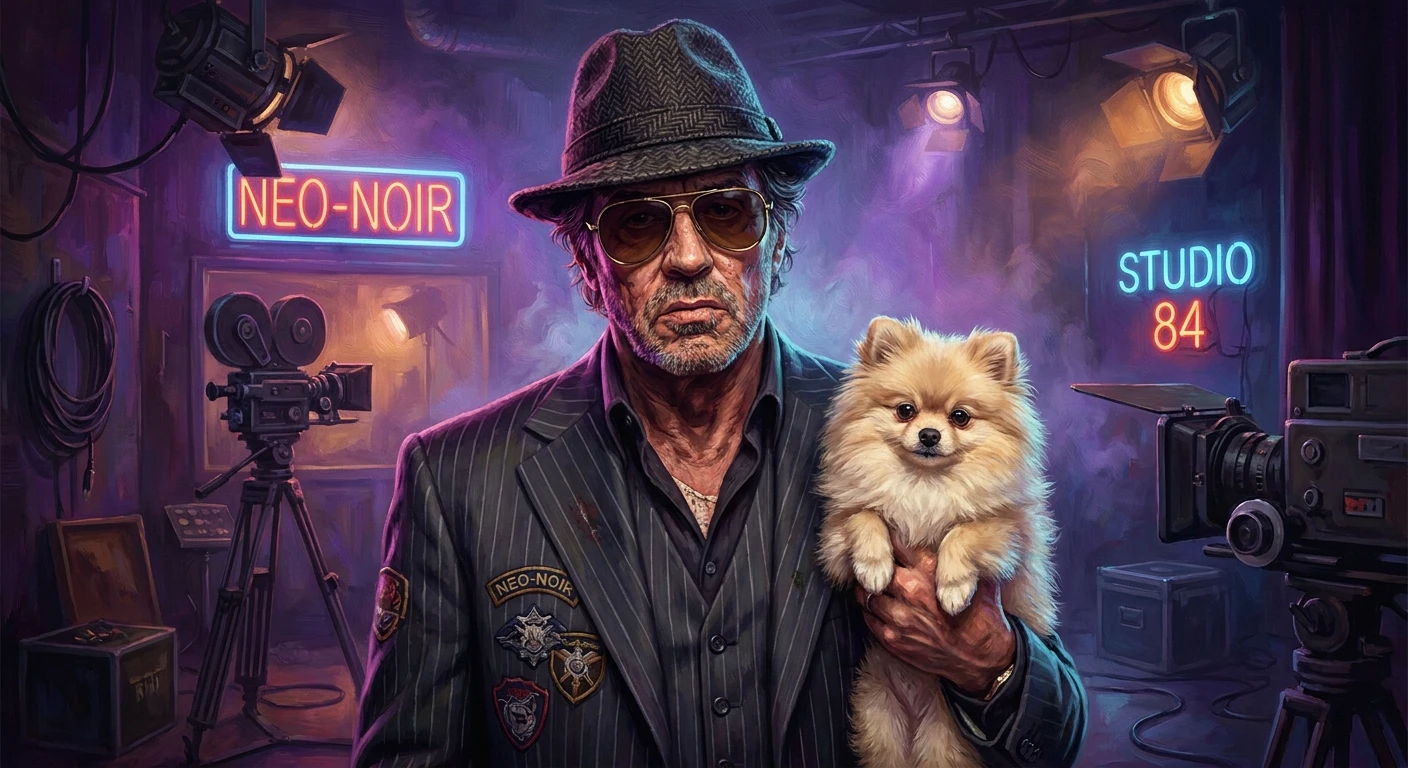
The Unvarnished Truth About mickey rourke now
Everyone keeps asking me about mickey rourke now, especially since his recent resurfacing in European indie films and his wildly unfiltered social media posts. Look, if you grew up watching 9½ Weeks, Angel Heart, or The Wrestler, you know exactly the kind of gritty, dangerous charisma the guy brings to the silver screen. But seeing his trajectory lately feels like riding a roller coaster through Hollywood history without a seatbelt. My buddy from Kyiv was actually telling me the other day about how Rourke has a massive, fiercely loyal cult following in Ukraine. It stems from his highly publicized visits to Eastern Europe, where he bonded with locals over a shared no-nonsense attitude, stray dogs, and unfiltered honesty. Apparently, he even expressed a desire to be buried in a small Ukrainian village at one point—a deeply personal detail that completely blew my mind and shows how deeply he connects with places outside the Hollywood bubble.
This is not just another typical celebrity gossip story about a fading star; it is a brutal, inspiring masterclass in sheer survival. We are going to unpack his entire career trajectory, the physical changes that consistently get the tabloids buzzing, and how he manages to stay relevant in a notoriously ageist and superficial industry. His incredible journey from a slick 1980s heartthrob to a boxing-bruised character actor, and finally to his current eccentric, dog-loving artistic phase, is endlessly fascinating. Survival is essentially his middle name. So, grab a strong cup of coffee, sit back, and let us chat about what the man is actually up to these days, how he got here, and why we simply cannot look away.
The Core of the Rourke Phenomenon
Understanding his longevity requires looking closely at the raw, undeniable value he brings to every single project. When independent directors cast him today, they are not just securing an actor; they are getting a literal force of nature who brings decades of genuine baggage to the set. His main value proposition is simple: authenticity bred from actual, lived trauma. For example, when he played Randy “The Ram” Robinson, the agonizing pain on his face wasn’t just exceptional acting—it was years of real boxing injuries, broken bones, and physical exhaustion speaking through his posture. Another clear example is his recent work in low-budget, gritty crime thrillers. Even when the script is lacking, his mere presence, complete with tailored eccentric suits and gravelly voice, elevates a standard B-movie into something oddly captivating and entirely watchable.
To really get the full picture of his artistic evolution, check out this breakdown of his distinct career phases:
| Career Era | Defining Characteristic | Key Project |
|---|---|---|
| The 80s Heartthrob | Smooth charm, undeniable sex appeal, quiet intensity | 9½ Weeks, Body Heat |
| The Boxing Hiatus | Physical destruction, raw grit, rejecting Hollywood | Professional Boxing Matches (1991-1994) |
| The Resurgence | Scarred veteran, critically acclaimed, brutally honest | The Wrestler, Sin City |
| The Maverick Veteran | Eccentric styling, indie thrillers, unapologetic | Various Indie Films (Present) |
If you genuinely want to understand how he built this enduring legacy despite burning countless bridges, you need to look at three core pillars of his unique acting methodology:
- Method-Adjacent Immersion: He does not just learn lines and hit his marks. He fully lives the exhaustion and the pain of the character. During his actual boxing years, he broke his nose multiple times and suffered a split tongue, literally bleeding for his alternative passion. He brings that physical memory into every bruised character he plays.
- Unpredictable Energy: Co-stars and directors frequently mention that he throws out the conventional script. He brings his own elaborate wardrobe, his own beloved dogs, and his own improvised dialogue to the set, making every single take completely unique and slightly dangerous.
- Vulnerability Behind the Brawn: Despite his heavily tattooed, muscular exterior and intimidating presence, his eyes always convey a deep, lingering, almost childlike sadness. This striking duality makes him incredibly compelling to watch, even when the movie itself is mediocre.
People often focus solely on the botched surgeries, but the real, deeper story is how he uses his battered face and broken body as a living canvas for storytelling. He has morphed into a living, breathing character actor who requires absolutely no makeup to look like he has been through hell and somehow made it back.
Origins of a Hollywood Rebel
Born Philip Andre Rourke Jr., his early life was incredibly tough and lacked any silver spoons. Growing up in the rougher neighborhoods of Miami, Florida, he was constantly surrounded by hard crowds and eventually found a necessary outlet in amateur boxing at the local Boys Club. He wasn’t born into a prestigious lineage of wealthy theater actors. Instead, he scrapped his way into the legendary Actors Studio in New York City. His immense, undeniable natural talent quickly caught the critical eyes of legendary instructors like Elia Kazan. His early film roles were relatively small, but his breakthrough performance in Body Heat (1981) as a slick arsonist proved he had an explosive, scene-stealing magnetism. He quickly became the bad boy everyone desperately wanted to fix, radiating a Marlon Brando-esque intensity that mainstream Hollywood had sorely missed since the 1970s.
Evolution Through the Ring and Back
By the early 1990s, despite massive financial success, he grew deeply disillusioned and disgusted with acting. He felt he was losing respect for himself and the industry’s corporate nature. So, he made the wild, unprecedented decision to return to boxing as a professional fighter. This evolution was incredibly brutal on his body. Over a multi-year undefeated streak, he suffered severe concussions, smashed cheekbones, ribs, and neurological issues. When he finally hung up his gloves based on strict medical advice, his face was largely unrecognizable. Rebuilding his acting career after that was an agonizingly slow, humbling process. He took minor roles, often playing basic thugs or one-dimensional villains to pay the bills. But then came his brilliant turn in Sin City and, ultimately, The Wrestler. The latter film mirrored his own tragic, beautiful life so perfectly that it earned him a well-deserved Oscar nomination and essentially gave him a miraculous second lease on life in cinema.
The Modern State of His Career
Fast forward to right now, and his modern state is somewhat chaotic but entirely his own making. He absolutely dictates his own terms. He frequently calls out industry hypocrisy, targets big studio executives on social media, and completely refuses to play the typical, polished Hollywood PR game. He lives in his own distinct orbit, constantly surrounded by his beloved Pomeranians, taking independent roles that finance his lavish, eccentric lifestyle. Occasionally, he still shows brilliant flashes of that raw, unteachable talent that made him famous four decades ago. He is a true survivor, standing tall and defiant amid the ruins of his own making.
The Science of Facial Reconstruction
Let us talk openly about the elephant in the room: his physical appearance. You cannot honestly discuss him without addressing the extensive plastic surgery. When he finally left professional boxing, he desperately needed reconstructive medical work to fix a severely broken nose and completely shattered cheekbones. Unfortunately, by his own admission, he went to the wrong guy to put his face back together. In precise medical terms, reconstructive maxillofacial surgery aims to restore form and function after massive trauma. It often involves complex bone grafting—taking bone from a rib or hip to physically rebuild the facial structure. The massive technical challenge here is dense scar tissue. When a professional boxer sustains repeated, severe blunt force trauma to the face over years, the soft tissue becomes highly dense and fibrotic. Operating on fibrotic tissue severely limits blood supply, making the healing process highly unpredictable and often leading to contractures (a permanent, unnatural tightening of the skin).
Neurological and Physical Impact of Boxing
Beyond the obvious cosmetic issues, there is the hidden, terrifying toll of his boxing career on his brain and body. Repeated brutal blows to the head cause massive micro-traumas to the brain’s delicate structure.
Here are some hard scientific facts about what happens to the human body during such a grueling, violent career:
- Chronic Traumatic Encephalopathy (CTE): Repeated concussions inevitably lead to the buildup of abnormal Tau proteins in the brain, which can severely affect mood regulation, short-term memory, and impulse control over time.
- Orbital Blowout Fractures: A direct, heavy punch to the eye can literally crack the paper-thin bones of the eye socket, trapping delicate muscles and causing permanent, visible structural changes to facial symmetry.
- Deviated Septum: Repeated nasal fractures cause the firm cartilage dividing the nose to shift severely, drastically obstructing normal breathing and requiring highly complex, painful septoplasty to correct.
- Cartilage Degradation: The ears and nose can heavily suffer from perichondrial hematoma (commonly known as cauliflower ear), where blood pools, clots, and hardens, permanently altering the natural shape of the features.
Understanding the actual biomechanics of his severe injuries clearly explains why the surgical interventions looked the way they did. It was not mere Hollywood vanity gone wrong; it was a desperate, somewhat botched medical attempt to reconstruct a severely battered anatomy.
Step 1: The Charismatic Debut
To truly appreciate the massive depth of his career, you need to watch his films in a specific, evolutionary sequence. Here is a comprehensive 7-step guide to experiencing his artistic journey. Start your marathon with Body Heat (1981). Even though his role as a professional arsonist is relatively brief, it perfectly sets the stage. Watch how he effortlessly commands the screen without doing much at all. It is pure, raw, unteachable magnetism.
Step 2: The Romantic Icon
Move on to the classic 9½ Weeks (1986). This is the highly controversial film that firmly cemented his absolute status as a global sex symbol. Pay close attention to his remarkable subtlety here; it is not just about the heavy eroticism, but the intense psychological control and quiet dominance his character exudes in every single frame.
Step 3: The Gritty Antihero
Next, watch Angel Heart (1987). This terrifying psychological horror film showcases his brilliant ability to play a disheveled, mentally crumbling protagonist. The slow, terrifying descent into complete madness is brilliantly acted and clearly shows his massive range goes way beyond just being a pretty face for romance movies.
Step 4: The Bizarre Interlude
Check out the cult classic Harley Davidson and the Marlboro Man (1991). This explicitly marks the strange transition period where he admittedly started taking roles purely for the paycheck. His deep disillusionment with the Hollywood industry became visibly apparent on screen, yet his cool factor remained completely off the charts.
Step 5: The Graphic Novel Enforcer
Jump forward to Sin City (2005). Buried entirely under heavy, restrictive prosthetics, he plays the unstoppable Marv. This incredible role utilized his imposing physicality and deeply gravelly voice perfectly, proving to a whole new generation that he was still a massive, terrifying presence on screen.
Step 6: The Masterpiece
You absolutely must watch The Wrestler (2008). This is non-negotiable for any film fan. It is basically a brutal autobiographical performance that will break your heart into a million pieces. Grab some tissues because the final, highly ambiguous scene is pure cinematic perfection.
Step 7: The Eccentric Veteran
Finish your journey with his recent work. Pick any of the independent European thrillers he has done lately in 2026. While the movies themselves might lack the massive budgets of Marvel films, watching him work as an older, zero-cares-given veteran is incredibly entertaining. He proves he still loves being in front of the camera on his own specific terms.
Separating Fact from Fiction
Let us clear up some of the absolute garbage floating around the internet about him.
Myth: He completely ruined his handsome face simply because he was weirdly obsessed with plastic surgery and desperately wanted to look young forever.
Reality: He suffered extremely severe facial trauma during his professional boxing career, including a smashed cheekbone and a shattered nose. The ensuing surgeries were initially necessary reconstructive medical procedures that unfortunately yielded very poor aesthetic results.
Myth: He absolutely hates acting and only does it nowadays for dog food money.
Reality: While he is notoriously cynical about Hollywood studio politics and hates executives, he still possesses a very deep, profound reverence for the actual craft of acting itself. He frequently praises his peers, defends independent cinema, and honors his mentors from the Actors Studio.
Myth: He was officially blacklisted from Hollywood because he was dangerous.
Reality: He definitely burned a lot of bridges with his volatile temper in the 1990s, making him highly uninsurable for massive studio projects. However, there was no secret “blacklist”—directors just grew tired of the off-screen drama until his massive comeback proved he was worth the undeniable risk.
Where does he live right now?
He actively splits his time between Los Angeles and various European cities, largely depending on his independent filming schedule and where his friends are located.
Is he still acting in 2026?
Yes, he is highly active in 2026, consistently taking roles mostly in independent European films, gritty action thrillers, and passion projects.
Did he really box professionally?
Absolutely. He maintained an undefeated professional boxing record with 6 wins (4 by knockout) and 2 draws in the early 1990s under the guidance of legendary trainers.
What kind of dogs does he own?
He is famously and fiercely devoted to small dogs, particularly Pomeranians. He famously thanked his dogs during his Golden Globe acceptance speech, crediting them with saving his life during his darkest periods of depression.
Will there ever be a sequel to The Wrestler?
No, the director and writers consider the tragic story completely finished, and the highly ambiguous ending is meant to stand perfectly alone forever.
Who was his original acting idol?
He has frequently and passionately cited Marlon Brando and Montgomery Clift as his ultimate inspirations for realistic, emotionally driven, method-style acting.
Does he still do his own stunts?
He used to do many of his own incredibly dangerous stunts, which heavily contributed to his massive physical wear and tear. Nowadays, he wisely leaves the heavy impacts to trained professional stuntmen.
How does he stay in shape?
He is still highly dedicated to the gym, spending hours lifting weights and doing cardiovascular conditioning, which explains his massive, imposing physique even in his later years.
Conclusion
The wild, unpredictable saga of his life is absolute proof that you can fall from the highest possible peaks, get dragged brutally through the mud, and still stand up swinging. He refuses to conform, refuses to apologize, and refuses to quietly fade away into obscurity. If you want to dive even deeper into fascinating celebrity survival stories and see how the titans of the 80s are holding up today, please share this article with your friends and leave a comment below about your all-time favorite Mickey Rourke movie!

Leave a Reply